
YourEnergyPal
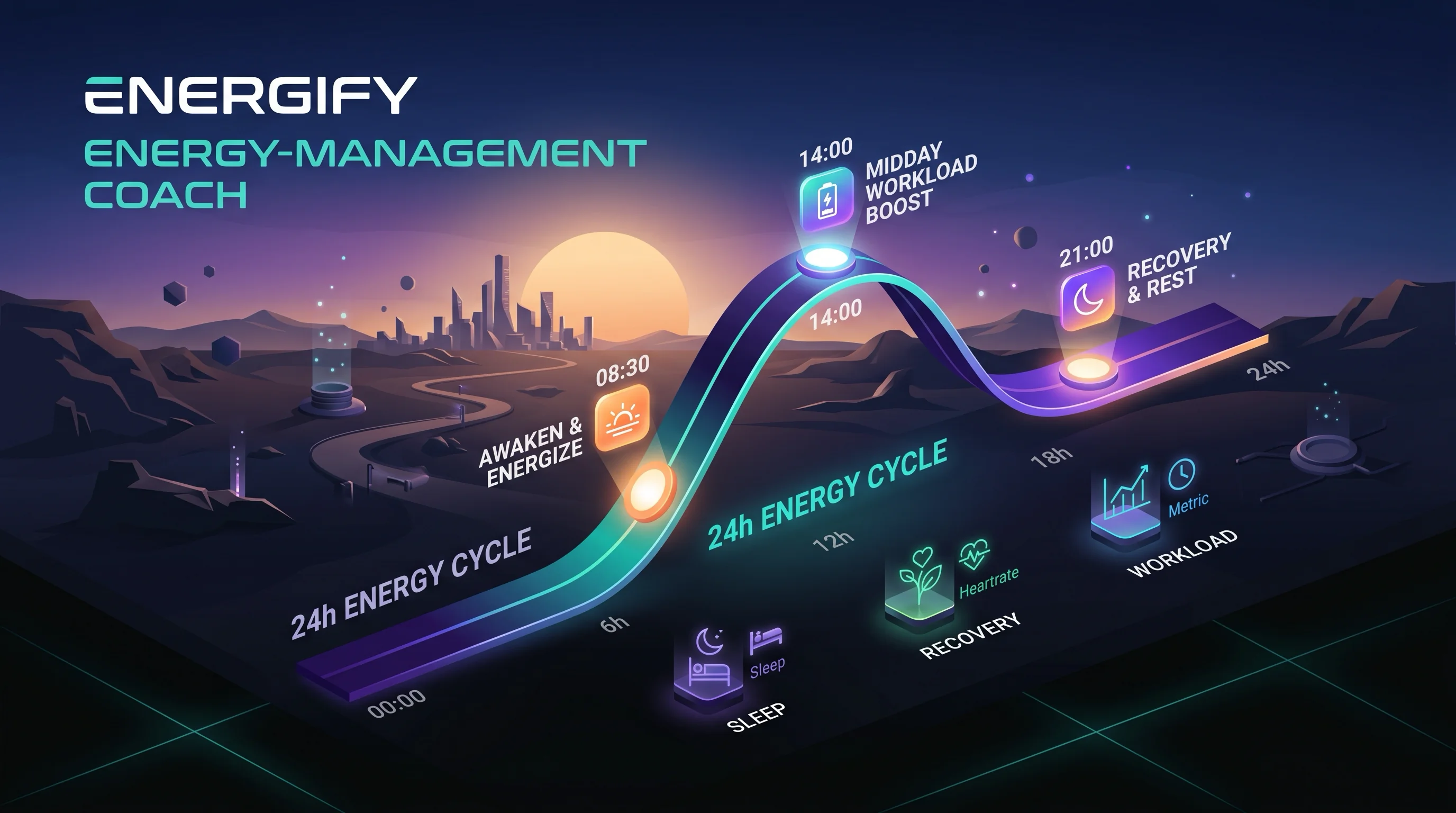
Energy-management coach — sleep, recovery, workload pacing, not just steps.
Users & fit
Persona
Knowledge workers, founders, athletes, 28–50, wearing Oura / Whoop / Apple Watch / Garmin. Already paying ~$8–$30/mo for their wearable's app. Want actionable schedule-aware coaching, not more graphs.
Problem
Wearable apps show HRV, sleep debt, recovery score — but tell you to "rest more" without knowing your calendar has 5 meetings today. Energy management requires context: workload + sleep + upcoming stress. No app integrates calendar + biometrics.
Urgency
Oura reported $200M+ revenue 2023, 2.5M+ rings sold; Whoop 4M+ subscribers. Wearable-data maturity + post-pandemic burnout + calendar-API ubiquity make schedule-aware coaching now viable.
Frequency
Daily — morning recovery check + midday pacing nudge + evening wind-down guidance. 2–4 sessions/day.
Figures marked (verify) or (estimated) come from training-data benchmarks; re-verify against live reports before external use.
Market
TAM
$18B wearables ecosystem 2024 (Grand View Research 2024); companion-app subset $2.1B (Sensor Tower Health 2025, verify)
SAM
$680M — wearable owners paying for companion/recovery apps beyond the device manufacturer's default
SOM (3-yr)
$22–$38M ARR in 3 yrs — 200k–340k paying subs at $110 ARPU
Revenue model
Subscription. Free tier for basic tracking, Pro tier unlocks schedule-aware coaching + wearable-API integration + team features.
Pricing
$14.99/mo or $109/yr Pro (single-person, wearable-connected). Comps: Oura app $5.99/mo, Whoop $30/mo device-included, Apple Fitness+ $9.99/mo, Athlytic $4.99/mo, HRV4Training $9.99/yr.
ARPU
Y1 ~$72; Y2 ~$98 with annual mix + team-tier
Landscape
Competitors
- Oura app
Bundled with ring; strong brand, weak calendar integration.
- Whoop
Device + app bundle; strategic platform with strong community.
- Apple Fitness+
iCloud-integrated workouts + recovery. Free with Apple One; ambient competitor.
- Athlytic
Apple Watch HRV + recovery app, ~500k users (verify). Indie; single-device.
- HRV4Training
Sport-science-grade HRV; serious-athlete niche.
Our wedge
Schedule-aware recovery: reads calendar events + workout history + HRV trend to recommend block timing ("shift your deep-work block earlier — HRV is low and your 3pm meeting will spike cortisol"). No competitor does calendar integration.
Moat
Multi-wearable integration layer + calendar ML model compound per user. Clinical-advisor partnerships (sport psychologists, chronobiologists) create a credentialed moat on recommendations.
Sources
Figures marked (verify) or (estimated) come from training-data benchmarks; re-verify against live reports before external use.
Current state
Stage
IdeationM1
Alpha — 100 Oura/Apple Watch users, Google Calendar integration, recovery-scheduling core.
M3
Public launch; Whoop + Garmin support; 5k paying subs.
M6
Team-tier for companies / sports programs; 25k subs, ARR $2.5M.
CAC
$25–$70 via wearable-community organic (Reddit r/ouraring, r/whoop) + TikTok biohacking content; paid $60–$140 (estimated)
LTV
$130–$260 (2–3 yr life; biohacker segment is sticky)
Payback
5–11 months
Risk surface
Risks
- Oura / Whoop ship equivalent calendar-integration features natively — platform substitution risk.
- Wearable-API dependency: Oura / Whoop can throttle or monetize API access.
- Apple Fitness+ bundling with Apple One undercuts SaaS value for iOS users.
- Medical-device gray area: "adjust your workload based on HRV" is coaching; "reduces anxiety" would be medical device.
- Team/enterprise sales cycle is slow — ARR concentration risk early.
Regulatory
- Apple HealthKit + Google Health Connect permissions — health-data-privacy rules, required in-app privacy notice, health-data permissions review.
- FDA Software-as-a-Medical-Device (SaMD): wellness-framing only; any "diagnose / treat" claim triggers regulated status.
- GDPR health-data special category in EU/UK — explicit consent, DPIA for cross-border transfers.
- Wearable-manufacturer API ToS — annual review for compliance drift (Oura, Whoop).
- HIPAA only if working with covered entities (employers in B2B2C context).
Figures marked (verify) or (estimated) come from training-data benchmarks; re-verify against live reports before external use.